
ARMY NEWS
JUST IN: Army Moving Toward ‘Embedded Training’ to Blend Live, Simulated Exercises
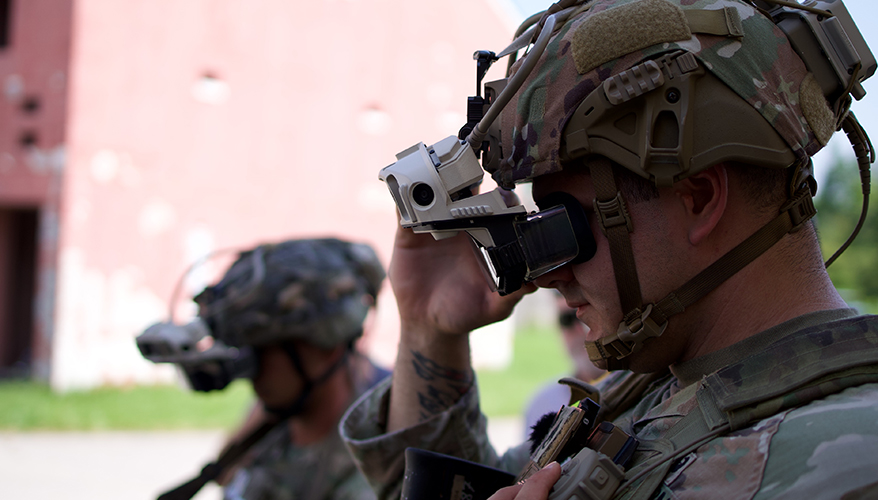
Army photo
LONDON — The Army wants to “embed” more of its high-tech simulators into its real-world platforms and break down the barriers between the “boxes” that contain the software and the equipment soldiers actually use, a service technology leader said April 14.
Amit Kapadia, chief engineer, synthetic environment program manager at the Army’s Capability Program Executive for Simulation, Training, Test and Threat, said the service is not just looking at “training for training’s sake, but training for operations and blending operations and training together for embedded training.”
Service leaders no longer want to have “separate boxes” for training. The capabilities need to be integrated into the Army ecosystem, he said during a talk at the ITEC 2026 conference in London.
The Army was previously known for spending a lot of money on reconfigurable virtual simulators for collective training to save money and for safety, he said.
“Our leaders and our commanders are wanting these things to be embedded in the cockpit, embedded within the ground platform,” he said.
The new trend requires coordination with the other portfolio managers to integrate training into the platforms. One example would be the new Future Long-Range Assault Aircraft helicopter, Kapadia said. That involves gaining access to digital models of its avionics system, he added.
The portfolio manager is establishing an embedded training chief engineer to help get after the concept, he added. It will involve linking to command-and-control and sensor systems, he said.
“We’re working out some of these things. We’re trying to take a look at ‘how do we do that?’” Kapadia said.
Training systems need to be “integrated with the Army, whether it’s on a platform, within a software stack or even a sensor layer that is using what an individual soldier has,” he said.
New acquisition authorities are helping the portfolio manager field new simulators quicker. It can no longer afford to issue big contracts that take years to execute. The changing nature of warfare dictates that training systems be more adaptable, he said.
One aspect that is changing is that everything the portfolio manager does is cloud based, Kapadia said.
The Army can use that to create 3D models and physics-based effects for programs such as the new Abrams main battle tank. Previously, it would take artists and developers a great deal of time to create virtual tanks for its Synthetic Training Environment, he said.
“We can do that much more quickly in our data-centric system,” he said.
The Army’s Transformation in Contact campaign allows the portfolio manager personnel to embed with units and change systems as they are being used. “Units are experimenting and changing capabilities at the edge, and our systems have to be dynamic enough to compensate for that, because the battlefield is changing,” Kapadia said.
Another factor helping the portfolio manager is high-level attention to what it is doing.
“We have senior leader interest — not just senior leaders in terms of one stars, two stars, three stars, but four stars and direct line of authority and insight from the chief of staff of the Army himself,” he said.