
EMERGING TECHNOLOGIES
New Hypersonic Test Facility Simulates Weather Conditions
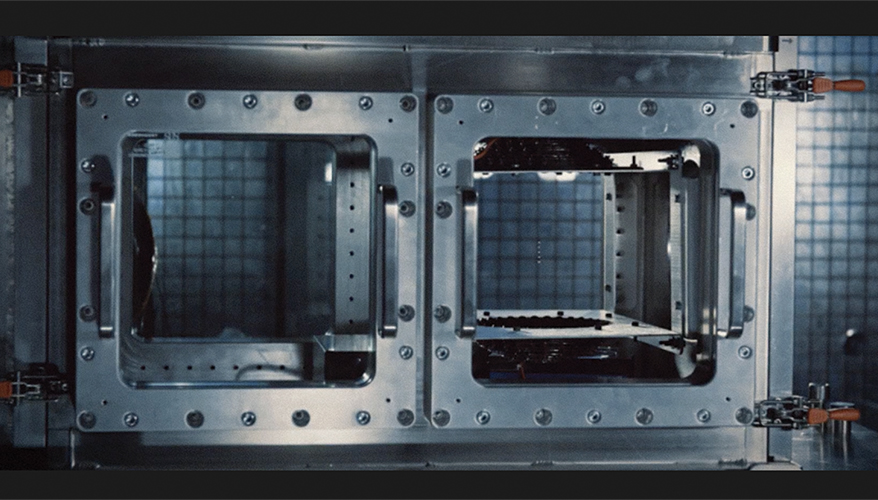
Auriga Space photo
A company that specializes in electro-magnetic launch systems has branched out to open a hypersonic materials testing facility that can simulate weather to more accurately measure its effects on high-speed vehicles.
Garden Grove, California-based Auriga Space’s Prometheus accelerator is an enclosed, controlled test bed that can replicate the pressures hypersonic materials face in flight, measuring speeds over 1,800 miles per hour.
Prometheus can test both commercial and defense systems, said the company’s CEO and founder Winnie Lai.
The company tests the durability of hypersonic systems by using acoustic sound wave technology to precisely place a raindrop or particle in a specific location to try and disrupt the projectile. The levitating rain particles contrast with other facilities that use nylon beads to act as inclement weather, Lai said in an interview.
“When the hypersonic systems fly through different weather phenomena — whether it be rain or snow or hail or even a sandstorm — we [are] going to be able to ensure that these systems are going to function,” Lai said. That includes the materials, sensors and other subsystems.
The United States is behind the curve on hypersonic capabilities, and the community has been designing high-speed vehicles without reliable data because few U.S. facilities can provide accurate testing, she said.
“What we provide at Auriga is the capability to do low-cost, high-cadence, rapid testing on the ground for these subsystems so that engineers designing these next-generation hypersonic systems gain confidence very early on that their systems are not going to break down when flying through different weather conditions,” Lai said.
The company hopes to both shorten the time of hypersonic programs — which take years, if not decades — and reduce the price of flight tests that cost hundreds of millions of dollars, she said.
It recently announced that Axiom Materials, which manufactures advanced composites for the aerospace industry, would be the first customer to use the facility.
“What we’re building has a strong need and also a strong demand in helping the United States catch up to our peer and near-peer adversaries,” she said.
Topics: Defense Innovation